293,445 people live in Scottsdale, where the median age is 47.3 and the average individual income is $79,618. Data provided by the U.S. Census Bureau.
Total Population
Median Age
Population Density Population Density This is the number of people per square mile in a neighborhood.
Average individual Income
Scottsdale is one of those places that rewards people who actually understand it — and frustrates those who treat it as a single market. In reality, it stretches more than 30 miles north to south, from the walkable energy of Old Town to the gated foothills of the McDowell Mountains, and each stretch behaves differently in price, pace, and lifestyle. This guide is built to help you read the city the way a local advisor does, so you can decide where you actually fit before you ever tour a home.
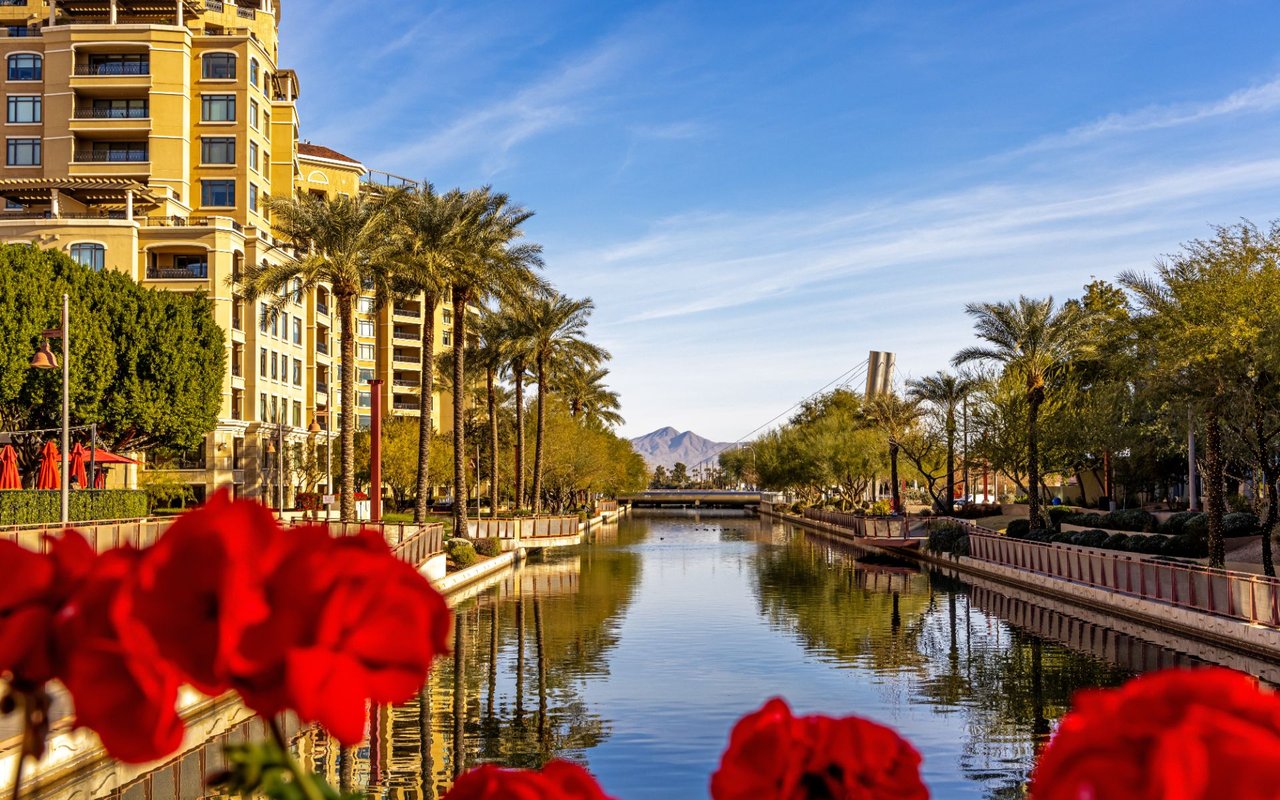
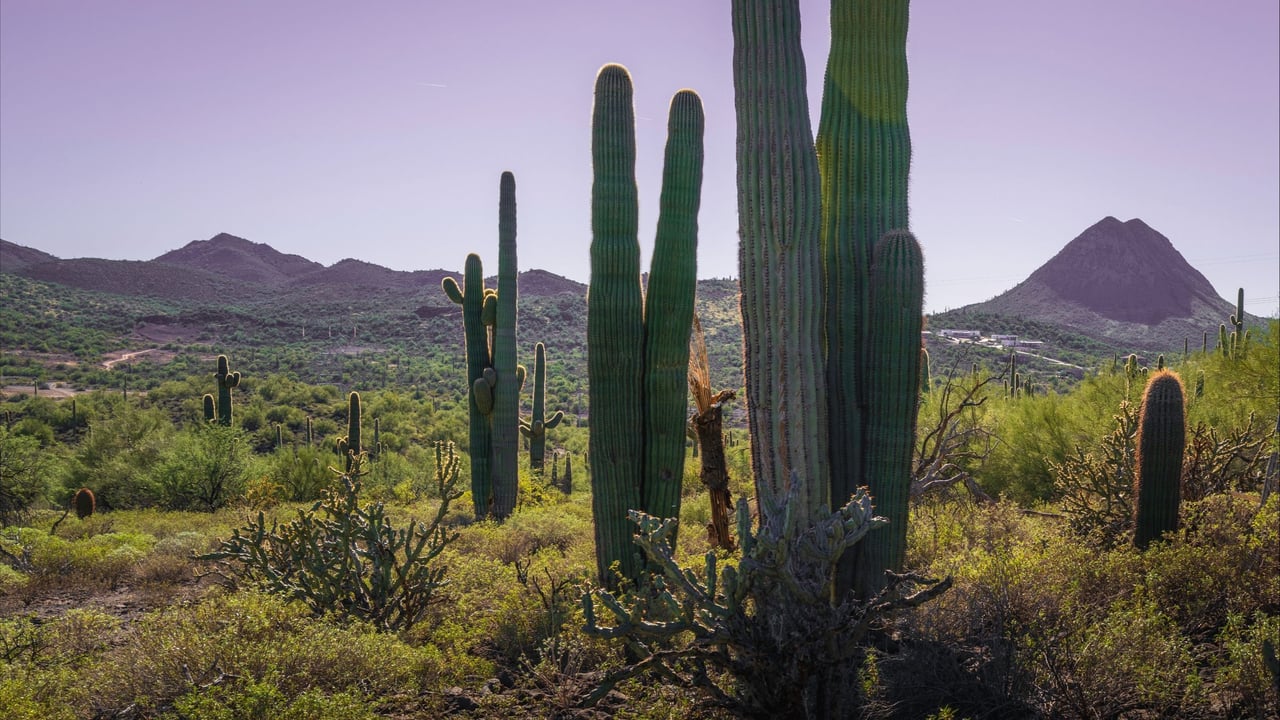
Scottsdale sits in the northeastern Phoenix metro, wrapped around the Sonoran Desert and framed by the McDowell Mountains and the 30,000-plus acres of the McDowell Sonoran Preserve. It built its reputation on resort living, championship golf, and a year-round outdoor climate, and that reputation still drives who moves here: relocating executives, second-home buyers, retirees who want active rather than quiet, and a steady flow of families drawn by the schools and safety.
The city is easiest to understand in three broad bands. South Scottsdale and Old Town are the urban, walkable core — galleries, restaurants, nightlife, and an increasingly redeveloped stock of condos and renovated mid-century homes. Central Scottsdale is the established residential middle, full of mature neighborhoods, strong schools, and homes that trade at a relative value compared to the extremes. North Scottsdale is where the luxury market lives, defined by master-planned communities, custom desert estates, and golf-anchored enclaves like DC Ranch, Silverleaf, Grayhawk, Troon, and Desert Mountain.
What ties it together is a lifestyle that's hard to replicate elsewhere: low-maintenance desert living, more than 200 days of sun, and a culture organized around being outdoors. People don't move to Scottsdale by accident — they move here for a specific way of life, and the housing reflects that.
Scottsdale has been one of the more resilient luxury and lifestyle markets in the Southwest, largely because demand is fed by people relocating from higher-cost states rather than by local move-up activity alone. Over the past several years the city has seen sustained interest from buyers in California, the Pacific Northwest, and the Northeast, and that out-of-state pull tends to keep the upper end of the market steadier than national headlines would suggest.
The broader pattern here is a two-speed market. The entry and mid tiers — roughly the more attainable condos, townhomes, and central single-family homes — are the most rate-sensitive and move with national mortgage conditions. The luxury tier, especially north of the 101, behaves more independently because a large share of those buyers are paying cash or are far less reliant on financing. When rates rise, the bottom of the market cools first; the top often keeps moving.
Because conditions shift by neighborhood and by quarter, the most useful number is rarely the citywide median — it's the absorption rate and list-to-sale behavior inside the specific community you're targeting. That granularity is exactly where local representation earns its value, and it's worth getting current figures for your price band before you assume the market is "hot" or "soft." For 98.6% of the homes The Torie Ellens Team has represented, the gap between list and sale price has been deliberately narrow — a sign of pricing strategy built on real, current data rather than averages.
Scottsdale's high-end tier is one of the most distinct luxury markets in the country, and it is genuinely its own segment — not simply "expensive Scottsdale." The defining communities sit in North Scottsdale: Silverleaf and DC Ranch in the McDowell foothills, Desert Mountain with its multiple private golf courses, Troon North, Estancia, and the architecturally significant custom homes scattered across Pinnacle Peak and Carefree-adjacent corridors.
Luxury buyers here are typically buying a lifestyle package: privacy, mountain or city-light views, golf or club membership, and contemporary desert architecture with deep indoor-outdoor integration. Many of these homes are custom or semi-custom, which means no two are comparable on paper — valuation depends on view corridors, lot orientation, finish level, and membership rights as much as square footage.
A meaningful portion of activity at this level never touches the public market. Off-market and pre-market transactions are common because high-net-worth sellers value discretion, and well-connected agents move inventory quietly through private networks. That dynamic favors buyers and sellers who have an advisor with real relationships in the area — the kind of representation that recently secured an unlisted modern desert estate for a relocating client at $5.4 million, below expected market value and entirely off-market. In this tier, access and negotiation strategy matter more than search portals.
New construction in Scottsdale concentrates in the north and northeast, where developable desert land still exists, along with select infill and redevelopment in South Scottsdale and Old Town. Buyers will generally encounter three categories: large-scale production and semi-custom homes within master-planned communities, true custom builds on private lots, and a growing number of luxury condo and townhome projects clustered near Old Town and the Scottsdale Quarter/Kierland corridor.
National and regional builders remain active across the master-planned communities, while the upper end is dominated by custom and boutique luxury builders who work lot by lot. For buyers, the practical realities to plan for are lead times, the difference between included features and design-center upgrades, and the fact that new-build pricing and incentives shift with the builder's standing inventory. Builder contracts also tend to favor the builder, which is one of the few areas where buyers most consistently underuse representation — having your own advisor review the contract and design selections can protect both budget and resale value.
If you want the newest possible product without the build timeline, the lightly-lived "spec" and recently completed homes in communities like Grayhawk, DC Ranch, and the Troon area are usually the fastest path.
The buying process in Scottsdale looks familiar in its bones but has local rhythms worth knowing. Competitiveness varies sharply by segment: well-priced homes in desirable central neighborhoods and the attainable end of North Scottsdale can move quickly with multiple offers, while ultra-luxury and highly specific custom homes often sit longer and trade on negotiation rather than speed.
Common property types break down roughly into single-family homes (the bulk of the market), patio homes and townhomes in gated and golf communities, condos concentrated in Old Town and along the resort corridors, and custom estates in the north. Cash is far more prevalent here than in most markets, particularly above the luxury threshold, which changes the competitive math for financed buyers.
Typical contingencies follow Arizona norms — inspection, appraisal, and financing — but desert-specific diligence matters more than buyers from other states expect. Pool and spa systems, HVAC capacity for the climate, roof condition, and the presence of any well or septic on rural-edge properties all deserve real scrutiny. Arizona also uses a standardized purchase contract with a defined inspection period, so the timeline for due diligence is shorter and more structured than in some states, which makes preparation and a responsive agent essential.
A few market-specific realities consistently surprise newcomers:
None of these are dealbreakers — they're simply the homework that separates a confident purchase from an expensive surprise.
If you're moving from out of state, the most important early decision is which Scottsdale you actually want, because the lifestyle gap between Old Town and North Scottsdale is enormous even though they share a zip-code prefix and a reputation.
Choose South Scottsdale or Old Town if you want walkability, nightlife, restaurants at your doorstep, and a more urban, lower-maintenance home. Choose central Scottsdale if you want established neighborhoods, strong schools, mature landscaping, and relative value. Choose North Scottsdale if you want space, views, gated privacy, golf, and the luxury communities — with the trade-off of longer drive times to the urban core.
Practical orientation for newcomers: Phoenix Sky Harbor International Airport is roughly 20–40 minutes away depending on where you settle, with Scottsdale Airport serving private and business aviation in the north. The climate is the headline adjustment — summers are genuinely hot, which is why nearly every home prioritizes pools, shade, and serious cooling, and why "snowbird" seasonality shapes the social calendar from fall through spring. Property taxes in Arizona are relatively moderate compared to many high-cost relocation origin states, and there's no city income tax, which often improves the overall cost picture for people coming from California or the Northeast.
The single best move before you commit is to spend time in two or three candidate neighborhoods at different times of day. Scottsdale's micro-areas feel different in person than they do on a map.
Walkability in Scottsdale is concentrated, not citywide. Old Town and parts of South Scottsdale are the genuinely walkable districts — you can live, dine, and go out on foot, and the area earns high walk scores by Phoenix-metro standards. Most of central and northern Scottsdale, by contrast, is car-oriented suburban and luxury development where you'll drive to nearly everything.
For getting around, the Loop 101 freeway is the spine that connects the city north to south and ties into the broader Phoenix freeway network, while Scottsdale Road, Pima Road, and Hayden Road carry most internal traffic. Commute times depend heavily on where you land: living near Old Town keeps you close to Tempe, ASU, and central Phoenix employment, while North Scottsdale residents trade longer drives for space and views. Scottsdale's tech, healthcare, financial-services, and tourism employers — clustered along the Scottsdale Airpark, the Kierland/Quarter business district, and the resort corridor — mean plenty of residents work within the city itself.
Cycling and recreational paths are strong, particularly the Indian Bend Wash greenbelt path that runs for miles through the heart of the city, and trolley/shuttle service circulates within Old Town. Regional public transit exists but is limited; most residents plan their life around a car.
For family buyers, schools are often the deciding factor, and Scottsdale generally delivers. Most of the city is served by the Scottsdale Unified School District, which has a long-standing reputation for high-performing schools and is one of the major draws for relocating families. Pockets of the broader area also fall under neighboring districts such as Paradise Valley Unified, so confirming the exact attendance boundary for a specific address is essential — boundaries don't always follow the lines buyers assume.
Scottsdale is also a notable hub for high-performing charter and private options. BASIS Scottsdale in particular has earned national recognition for academic rigor, and several well-regarded private and college-preparatory schools serve the area. The practical takeaway for buyers: school quality here is strong overall, but it varies enough between attendance zones and program types that the right home and the right school assignment should be evaluated together, not separately.
Outdoor access is the quiet reason many people never leave Scottsdale once they arrive. The crown jewel is the McDowell Sonoran Preserve, a vast protected desert with an extensive trail network for hiking, trail running, and mountain biking right at the city's edge. The Indian Bend Wash greenbelt threads parks, lakes, and paths through the central city, giving residents a continuous corridor of green for walking and cycling.
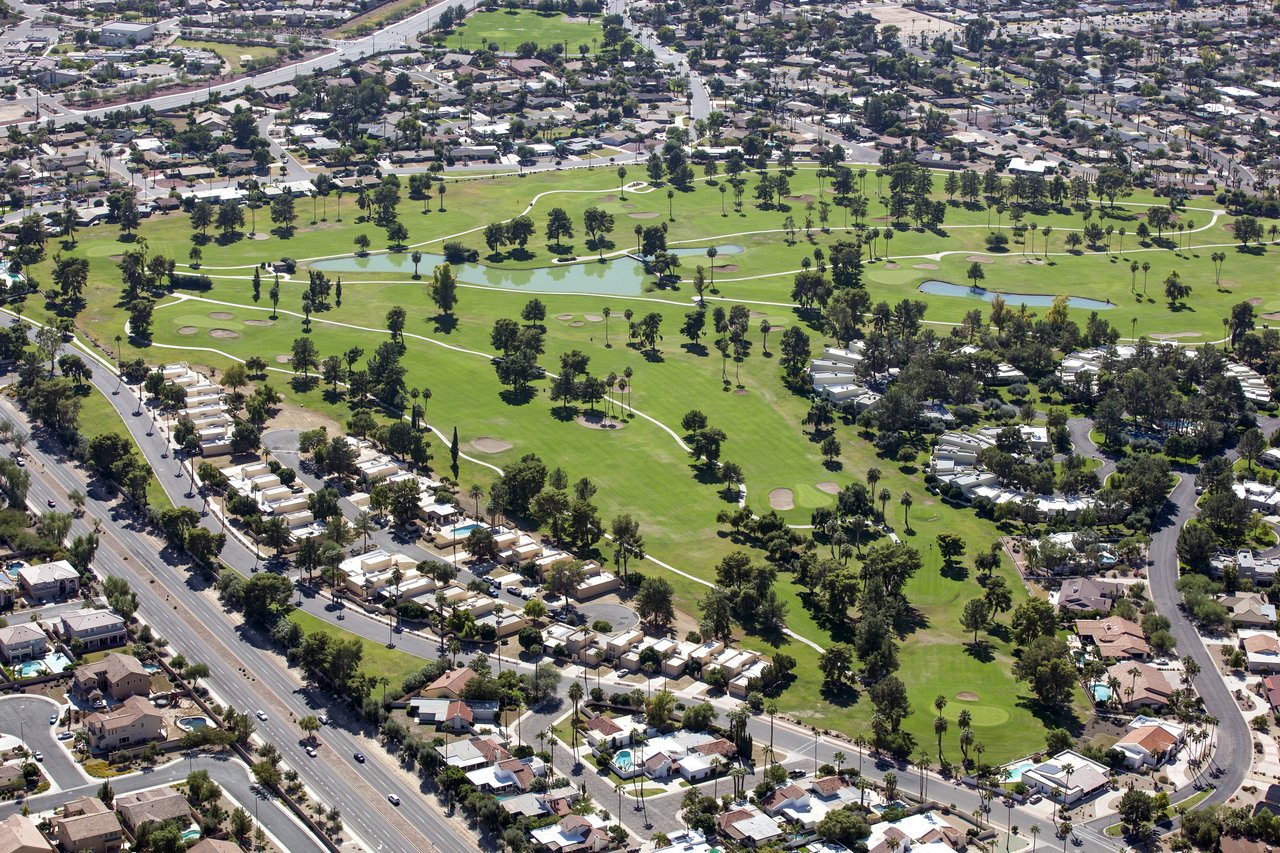
Golf is practically a civic feature, with dozens of public and private courses across the city, and the desert setting means world-class scenery is built into everyday recreation. For buyers, the relevant point is simple: in most Scottsdale neighborhoods, meaningful outdoor space — whether a preserve trailhead, a greenbelt, or a community park — is close by, and proximity to a trailhead or the greenbelt can be a genuine value-add worth weighing alongside the home itself.
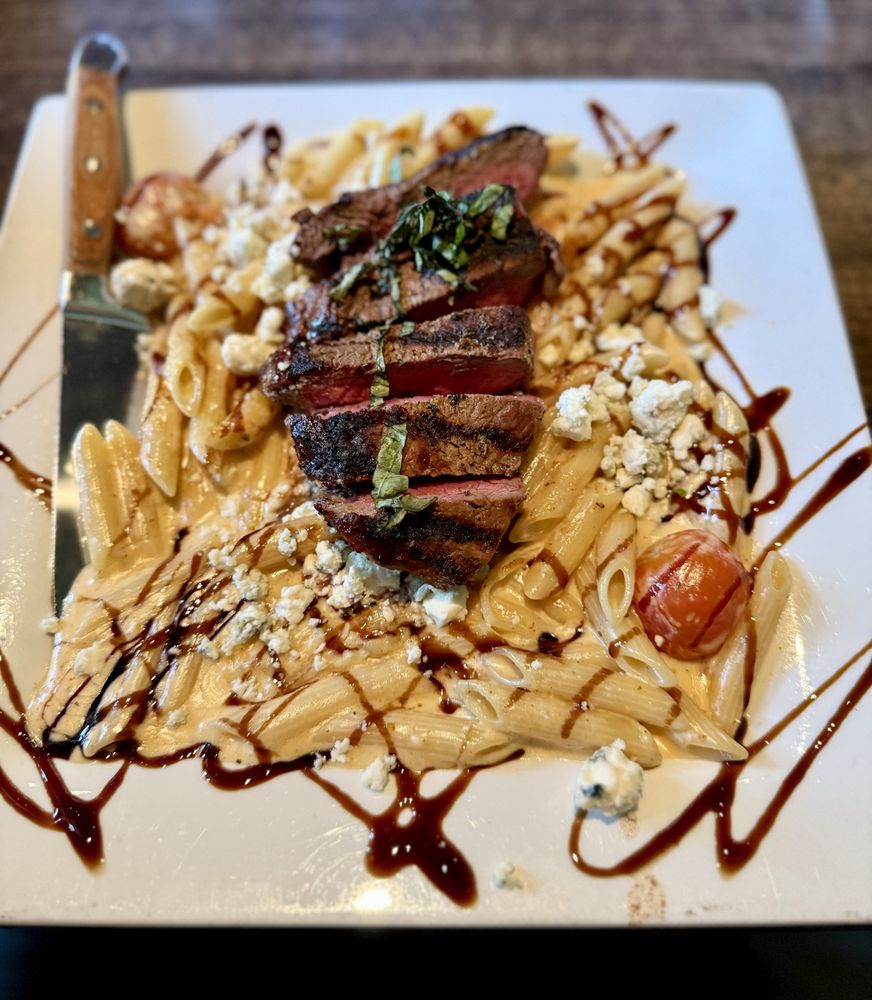
Scottsdale's food and entertainment scene reads as a lifestyle signal more than a checklist. Old Town is the center of gravity — a dense, walkable mix of upscale restaurants, rooftop bars, breweries, and a nightlife district that draws regionally. It's where the city feels most social and where a younger, going-out crowd concentrates.
North of there, the tone shifts toward refined and resort-driven: notable dining clusters around Kierland Commons and the Scottsdale Quarter, and the luxury resorts host destination restaurants aimed at a more polished evening out. The overall picture is a city that takes hospitality seriously, with enough range that "going out" can mean a buzzy patio at sunset or a quiet, high-end dinner depending on the night. For buyers, the relevant read is which scene you want within easy reach — it's one of the clearest dividing lines between the southern and northern halves of the city.
From a daily-life standpoint, Scottsdale is exceptionally well served. At the high end, Scottsdale Fashion Square is one of the largest and most upscale malls in the Southwest, and the open-air Kierland Commons and Scottsdale Quarter pair luxury and lifestyle retail with dining in a walkable setting that anchors North Scottsdale. Old Town adds galleries, boutiques, and design shops with a more independent character.
For everyday needs, grocery, pharmacy, and big-box convenience are distributed throughout the city, so most neighborhoods put essentials within a short drive. The practical buyer takeaway: shopping access is rarely a compromise anywhere in Scottsdale — the question is simply whether you want luxury retail within walking distance or are content to drive a few minutes for it.
If you're weighing a move to Scottsdale — or a move within it — the most valuable thing you can have is someone who knows how each of these neighborhoods actually trades, not just what the listings say. That's where The Torie Ellens Team comes in. Based in North Scottsdale and built around contract strategy, negotiation, and discreet, concierge-level service, the team has guided more than $458 million in total sales volume with a 98.6% list-to-sales price ratio — a record earned across everything from full-price luxury repositionings to entirely off-market acquisitions. Whether you're buying your first Scottsdale home, selling a private estate, or relocating from out of state and starting from scratch, the goal is the same: complete command of the process, from pricing strategy to closing, with results that give you certainty.
When you're ready to talk specifics — current numbers for your price band, a particular community, or a quiet look at homes before they hit the market — reach out directly:
There's no pitch here — just a local expert who'll give you a straight read on the market and help you make a confident decision.
There's plenty to do around Scottsdale, including shopping, dining, nightlife, parks, and more. Data provided by Walk Score and Yelp.
Explore popular things to do in the area, including Pinnacle Grille, Saguaro Blossom, and Peekaboo Cookies.
| Name | Category | Distance | Reviews |
Ratings by
Yelp
|
|---|---|---|---|---|
| Dining · $$ | 1.37 miles | 390 reviews | 3.4/5 stars | |
| Dining | 1.55 miles | 8 reviews | 3.9/5 stars | |
| Dining | 1.69 miles | 2 reviews | 5/5 stars | |
| Dining | 2.6 miles | 0 reviews | 0/5 stars | |
| Shopping | 1.91 miles | 0 reviews | 0/5 stars | |
| Active | 0.86 miles | 0 reviews | 0/5 stars | |
| Active | 1.41 miles | 0 reviews | 0/5 stars | |
| Active | 2.6 miles | 0 reviews | 0/5 stars | |
| Active | 2.6 miles | 0 reviews | 0/5 stars | |
| Active | 2.6 miles | 0 reviews | 0/5 stars | |
| Active | 2.6 miles | 0 reviews | 0/5 stars | |
| Active | 2.6 miles | 0 reviews | 0/5 stars | |
| Active | 2.6 miles | 0 reviews | 0/5 stars | |
| Beauty | 1.41 miles | 0 reviews | 0/5 stars | |
| Beauty | 2.42 miles | 0 reviews | 0/5 stars | |
| Beauty | 2.42 miles | 0 reviews | 0/5 stars | |
| Beauty | 2.6 miles | 0 reviews | 0/5 stars | |
| Beauty | 2.6 miles | 0 reviews | 0/5 stars | |
| Beauty | 2.6 miles | 0 reviews | 0/5 stars | |
| Beauty | 2.6 miles | 1 review | 2/5 stars | |
| Beauty | 2.6 miles | 0 reviews | 0/5 stars | |
| Beauty | 2.6 miles | 0 reviews | 0/5 stars | |
| Beauty | 2.6 miles | 0 reviews | 0/5 stars | |
| Beauty | 2.6 miles | 2 reviews | 5/5 stars | |
|
|
||||
|
|
||||
|
|
||||
|
|
||||
|
|
||||
|
|
Scottsdale has 137,970 households, with an average household size of 2.2454545454545456. Data provided by the U.S. Census Bureau. Here’s what the people living in Scottsdale do for work — and how long it takes them to get there. Data provided by the U.S. Census Bureau. 293,445 people call Scottsdale home. The population density is 2,591 and the largest age group is Data provided by the U.S. Census Bureau.
Total Population
Population Density Population Density This is the number of people per square mile in a neighborhood.
Median Age
Men vs Women
Population by Age Group
0-9 Years
10-17 Years
18-24 Years
25-64 Years
65-74 Years
75+ Years
Education Level
Total Households
Average Household Size
Average individual Income
Households with Children
With Children:
Without Children:
Marital Status
Blue vs White Collar Workers
Blue Collar:
White Collar: