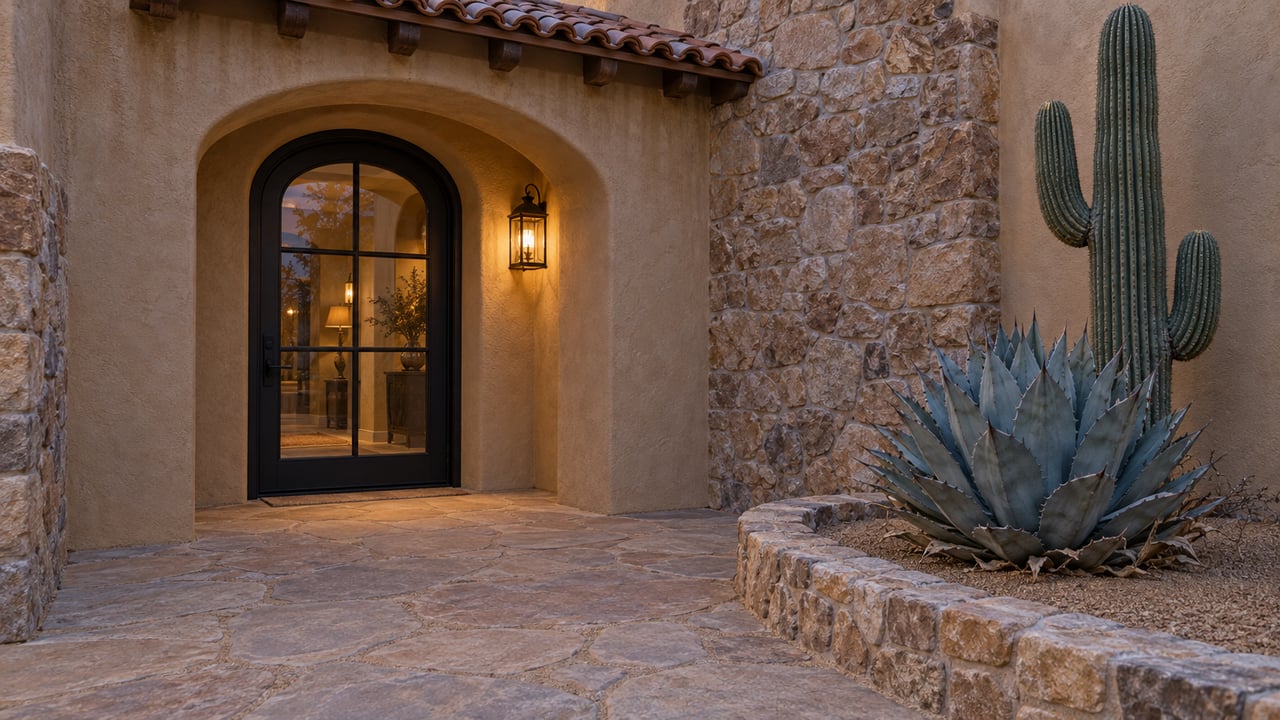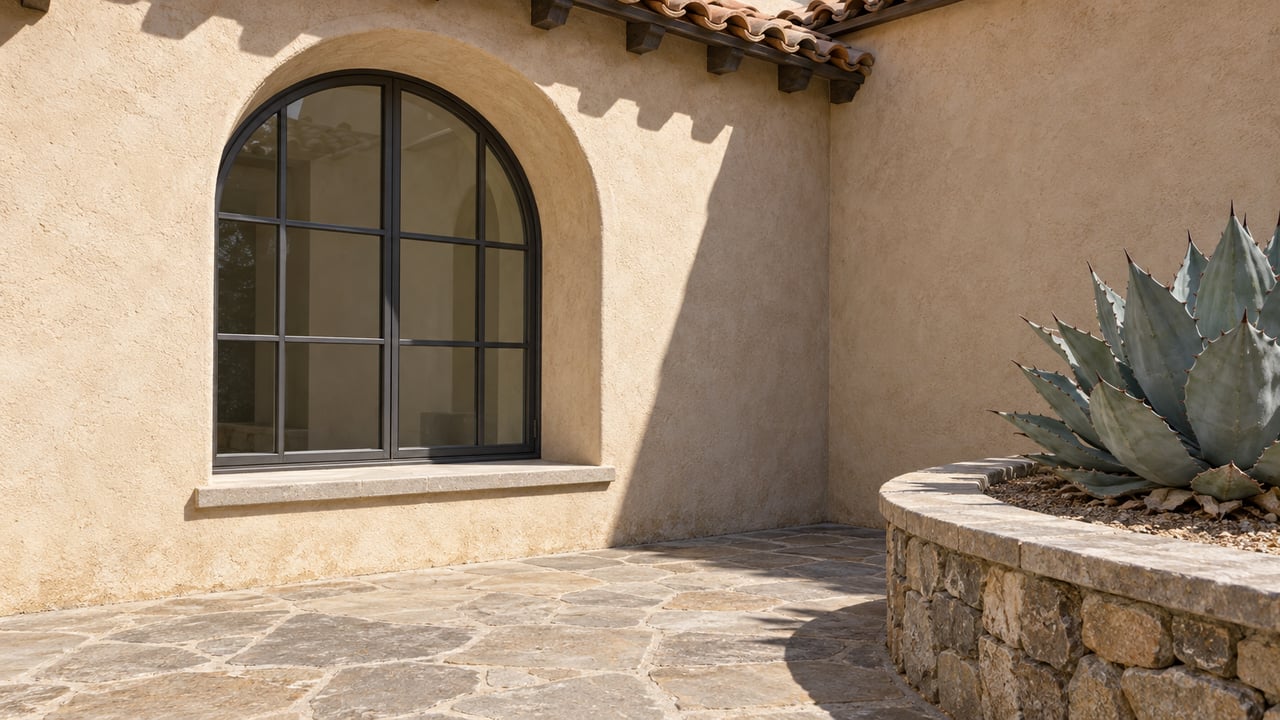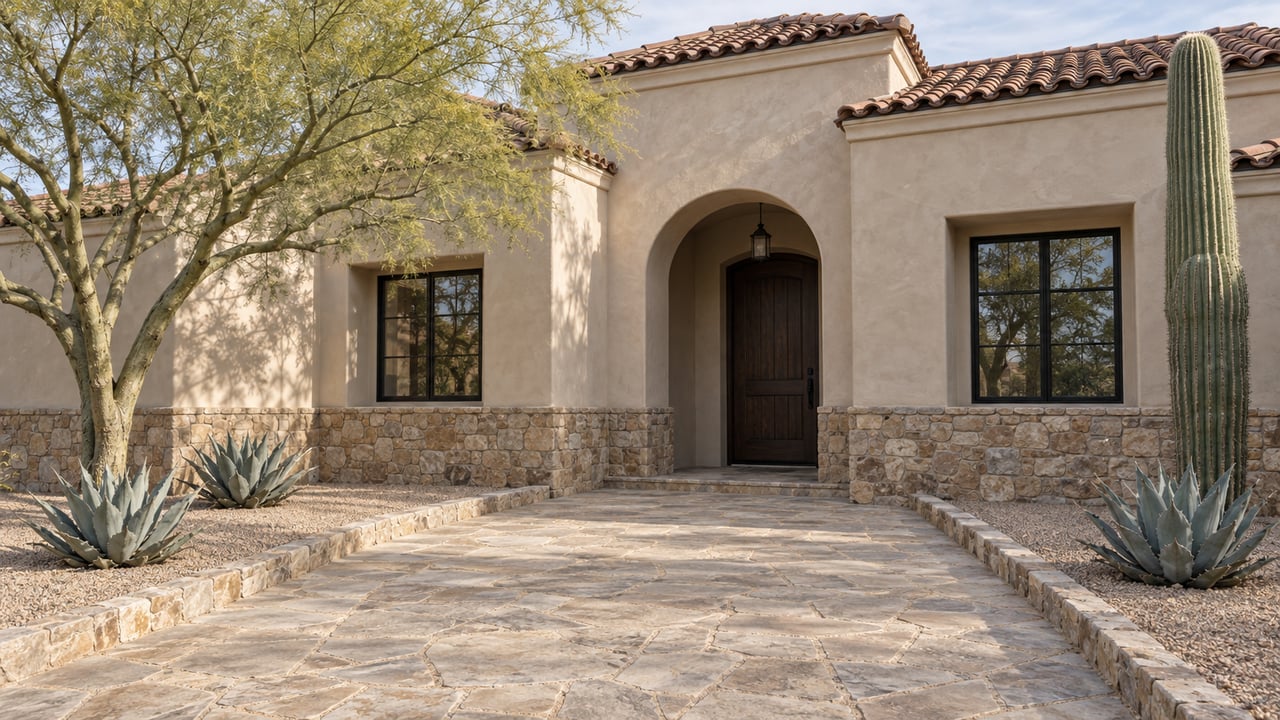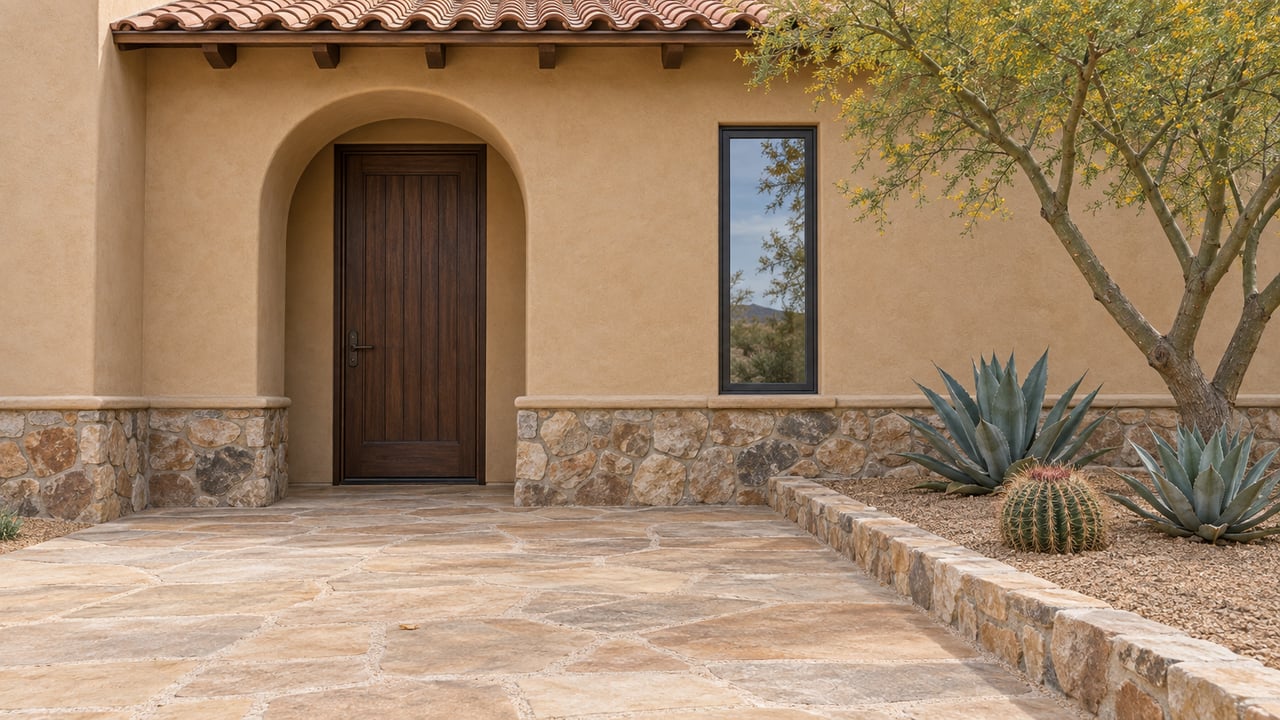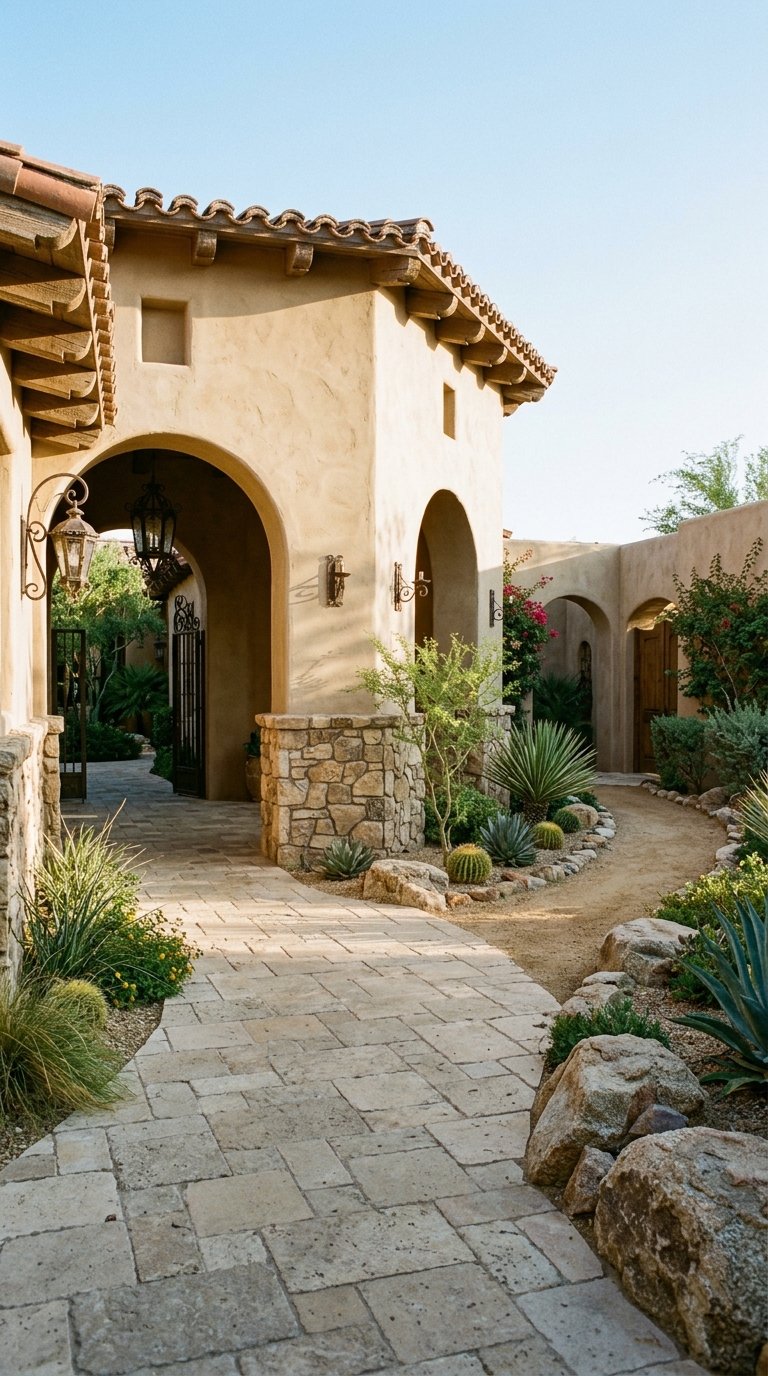
North Scottsdale is a market defined by its limits. With more than 60% of the city zoned residential and the remaining buildable desert vanishing into the McDowell Sonoran Preserve and state trust land, the question of whether to buy new or buy resale is shaped less by preference and more by geography itself. That scarcity has produced a telling split: roughly 15% to 20% of single-family transactions are new builds, while 80% to 85% are resales. New construction here is, by definition, premium—North Scottsdale's overall median list price sits near $1.499 million in early 2026, but single-family new builds from premium builders routinely start between $2 million and $4 million-plus.
For buyers, that means the new-versus-resale decision carries real financial weight. This guide breaks down both paths with the specificity North Scottsdale demands—down to the community level, the HOA structure, and the lot's preservation easements—so you can decide based on how you actually intend to live, spend, and hold the property.
The North Scottsdale New Construction Landscape
True new construction has concentrated into a handful of luxury strongholds, almost all clustered in the far northeast 85255 corridor or as density-driven infill near the Loop 101.
Storyrock is arguably the most active hub for desert-envelope new builds, sitting directly adjacent to the Preserve. Toll Brothers, Shea Homes (its Reserves and Signature collections), David Weekley Homes, and Rosewood Homes are all active here, building large single-level estates designed around view corridors. Sereno Canyon, tucked into the McDowell foothills near 128th Street and Ranch Gate Road, is handled exclusively by Toll Brothers and ranges from lock-and-leave Enclave Collection villas up to estate homes on larger parcels. Seven Desert Mountain, an enclave within the legacy Desert Mountain footprint, offers ultra-premium modern villas from Camelot Homes and Family Development built along its No. 7 short-course track. And Optima McDowell Mountain, the phased six-tower condo project near Scottsdale Road and the 101, is a major driver of the new-build transaction numbers as it sells through ahead of its 2026–2027 completion.
By contrast, the marquee master plans—DC Ranch, Silverleaf, Grayhawk, Troon North, Troon Village, and Terravita—are functionally built out. "New" inventory in these communities means custom builds on rare remaining lots, teardown-and-rebuilds, or down-to-the-studs remodels, not developer expansion.
A critical point most buyers miss: the advertised base price is rarely close to the final walk-out price. Luxury production homes and villas start around $1.2 million to $1.9 million for 2,200 to 3,500 square feet, while estate collections start between $2.0 million and $3.5 million and routinely close between $3 million and $5 million-plus. True custom builds in Silverleaf or Estancia are a different universe entirely—land alone runs $500,000 to $2 million-plus, with build costs of $380 to $600-plus per square foot pushing all-in totals to $3.5 million to $10 million-plus.
The Resale Market
The resale market has undergone a meaningful shift. Active inventory across the region is up roughly 29% year-over-year, moving North Scottsdale toward a healthier, more buyer-leaning balance. Sellers who price to recent comparable sales are moving quickly; those chasing the pricing peaks of prior years are sitting on the market for months before cutting.
Velocity and inventory vary sharply by micro-market:
Community | Active Inventory | Median Days on Market | Median Listing Price |
|---|---|---|---|
DC Ranch | ~131 listings | 56–77 days | $3,500,000 |
Grayhawk | ~137 listings | 64 days | $677,000 |
Troon / Troon North | ~264 listings | 66–72 days | $1,387,000–$1,996,000 |
McDowell Mountain Ranch | ~78 listings | 45–55 days | $1,382,500 |
The pattern is clear: mid-tier master plans with standard-density layouts and townhome or condo components—Grayhawk and McDowell Mountain Ranch—transact more fluidly, while custom-heavy luxury footprints like DC Ranch and upper Troon carry naturally longer marketing cycles because of their multi-million-dollar entry points.
Age profile matters just as much as price. Because North Scottsdale developed in waves running south to north, structural age clusters by neighborhood. Grayhawk homes average 22 to 28 years old (built 1996–2004), McDowell Mountain Ranch 24 to 31 years (1995–2002), DC Ranch 18 to 28 years (first homes in 1998), and Troon spans 20 to 40 years, with Troon Village dating to the mid-1980s. The practical consequence is that mechanical systems—roofs, HVAC, pool equipment—in much of this inventory are on their second cycle of major capital replacement.
Price Comparison: New vs. Resale
The price gap between new and resale here is less about appreciation and more about the compounding costs of construction, terrain, and modern code. Standard resale homes run roughly $450 to $515 per square foot regionally, but new builds command a steep structural premium across every tier:
Tier | Resale $/Sq. Ft. | New Build $/Sq. Ft. | Premium |
|---|---|---|---|
Entry Luxury / Family Master Plans | $430–$480 | $550–$650 | ~25% for modern code, high ceilings, new mechanicals |
Upper Desert Foothills (Troon vs. Storyrock) | $500–$600 | $700–$850+ | ~35% for hillside site prep and luxury configurations |
Ultra-Luxury Enclaves (Silverleaf vs. Seven / custom) | $850–$1,200+ | $1,400–$1,800+ | Up to 50% for modern architecture, zero-edge views, smart-home integration |
On appreciation, North Scottsdale is in a luxury recalibration. Broad year-over-year resale appreciation has normalized to a stable 3% to 5%. But that average masks a wide gap: un-renovated late-1990s and early-2000s Tuscan and Mediterranean homes are seeing flat or soft performance, while clean desert-contemporary remodels are capturing premiums that can rival new-build pricing precisely because they spare the buyer the 12-month build wait.
When you contract a new semi-custom or production build, expect the base price to lift 15% to 30% by closing:
[Base Advertised Price]
   + [Lot Premium: $100k–$400k+]
   + [Structural Options: $75k–$150k]
   + [Design Center Finishes: $120k–$250k]
   = TRUE PURCHASE PRICE
A lot backing the Preserve or framing a sunset view corridor carries a six-figure surcharge; attached casitas run $90,000 to $140,000; multi-slide pocketing glass doors run $15,000 to $35,000 per wall. And one cost catches nearly every first-time new-build buyer off guard: most single-family pricing excludes the backyard and pool. Builders deliver raw dirt, so plan an additional $80,000 to $200,000-plus post-closing for landscaping, hardscape, shade structures, and a pool.
The Case for New Construction
Financial protection through the builder warranty. Buy resale, and aging mechanical systems become your liability the day you close. New construction carries a tiered 1-2-10 warranty—one year bumper-to-bumper on materials and workmanship, two years on plumbing, electrical, and HVAC delivery systems, and ten years of structural coverage on the foundation, load-bearing walls, and roof framing.
Energy efficiency that pays for itself in the desert. Where summer temperatures routinely break 110°F, modern code is a financial instrument. A 4,000-square-foot new build frequently costs less to cool than a 2,500-square-foot 1998 home, thanks to high-SEER2 variable-speed heat pumps, spray-foam-encapsulated attics that stay within 10 to 15 degrees of the living zone rather than baking at 140°F, and Low-E glass that blocks up to 95% of incoming radiant heat.
Current desert design. The Tuscan boom left North Scottsdale with a surplus of dark, fragmented, small-windowed homes. New builds deliver what today's luxury buyer wants: desert-contemporary lines, retractable window walls that erase the boundary between great room and patio, and 12-to-16-foot ceilings over open floor plans.
Total customization before the shovel hits dirt. You decide layout, casita, garage count, finishes, and outlet placement at the blueprint stage—no living through demolition dust or discovering surprises behind 25-year-old drywall.
The Case Against New Construction
You don't fully control your own lot. Scottsdale enforces the Environmentally Sensitive Lands Overlay (ESLO) and mandates Natural Area Open Space (NAOS) easements. Depending on slope and landform, 20% to as much as 80% of a parcel must remain permanently untouched. On a one-acre lot with a 30% NAOS requirement, over 13,000 square feet is off-limits—you cannot grade it, pave it, or expand a patio into it. Even a fallen saguaro must legally be left in place as wildlife habitat.
The "stick phase." Scottsdale's plant-salvage law boxes and replants native vegetation, but newly replanted desert takes years to fill in. For the first three to five years, a new master plan offers young, staked trees and sparse undergrowth—and very little privacy.
Moving-target timelines. A quoted "10-to-12-month build" is optimistic. Design Review Boards audit everything down to a home's Light Reflective Value (which cannot exceed 35%), and a single rejected color palette or a wash-crossing engineering change can add two to four months before the first footer is poured.
The financial premium and the raw-dirt backyard. You're buying at retail, paying lot premiums, funding a 15% to 30% design lift, and then writing a $100,000-to-$250,000 check to make the backyard usable—costs that, in a resale, are already baked in at a depreciation discount.
HOA volatility during development. While a master plan is still selling, the builder controls the HOA, not residents. Rules, amenity timing, and assessment rates stay somewhat unsettled until the developer hands control to a resident-elected board near full build-out.
The Case for Resale
Instant maturity and privacy. Resale skips the stick phase entirely. Troon North, DC Ranch, and Grayhawk properties come with 30-year-old saguaros, towering ironwood and palo verde, and genuine backyard privacy from day one. The prior owner already spent the $100,000 to $250,000 to build out landscaping, pools, and outdoor kitchens—and you absorb it at a depreciation discount, rolled into your mortgage.
Stronger negotiation leverage. With inventory up roughly 29% year-over-year and homes sitting a median of 63 to 69 days, resale buyers hold leverage. Properties are closing at roughly 96% to 98% of list, so a $2 million resale realistically leaves room to negotiate $50,000 to $80,000 off. Production builders, by contrast, protect base pricing to avoid devaluing earlier phases—they offer design credits instead of price cuts.
Speed to occupancy. This is the decisive factor for many buyers:
Resale:           [Contract] → [Inspection & Appraisal] → [Move In: 30–45 Days]
New Construction: [Contract] → [Design & Permitting] → [Construction] → [Move In: 10–14 Months]
Proven neighborhoods and guarded views. In a built-out community, view corridors are locked, rooflines are known, HOAs have completed their developer-to-resident handover with mature reserve funds, and you can read traffic, density, and neighborhood character before you ever write an offer.
The Case Against Resale
The remodeling burden is real. Full gut-renovations of luxury homes run $200 to $450-plus per square foot, so a complete desert-contemporary overhaul of a 3,500-square-foot DC Ranch or Troon home easily reaches $700,000 to over $1 million. Individual rooms are steep on their own—luxury kitchens at $107,000 to $180,000-plus, primary baths at $68,000 to $115,000-plus—and unless you live in a construction zone for 6 to 12 months, add tens of thousands in rental carrying costs.
Aging infrastructure on a predictable failure curve. Homes from the 1995–2005 build waves are near the end of major system lifecycles. Large homes run three to five split HVAC systems at $12,000 to $18,000 each; tile-roof underlayment degrades after 20 to 25 years, with lift-and-reset replacements at $25,000 to $45,000-plus; and early-2000s pool finishes and equipment hit buyers with $20,000 to $35,000 in post-closing resurfacing.
Structural ceilings on customization. Eight-to-ten-foot ceilings, sunken rooms, and load-bearing partition walls can't always be opened into soaring modern layouts without cost-prohibitive steel work, and retrofitting pocketing glass walls means altering structural headers—frequently restricted by DRBs.
Turnkey scarcity. The catch is that fully modernized resales are rare and fiercely contested, often selling at a premium in bidding wars, while the bulk of available inventory is un-renovated Tuscan-era stock. Buyers are often forced to choose between overpaying for turnkey or taking on immediate capital renovation.
Financing & Cost Differences
The funding mechanism changes entirely based on who carries construction risk. For resale and semi-custom build-to-order homes from Toll Brothers or Shea, you use a conventional or jumbo loan—the builder finances construction on its own corporate credit, you put down 5% to 15% earnest money, and you pay no mortgage interest until the home is finished and you close. For true custom lots in Silverleaf or Estancia, you need a construction-to-permanent (single-close) loan that closes before breaking ground, funds the lot, and releases money on a draw schedule. The catch: you pay interest-only on the drawn balance throughout the 12-to-18-month build—often while still carrying your current residence.
Builder incentives are powerful but tied to strings. Because builders won't cut base prices, they use concessions instead, nearly always conditioned on their preferred lender. Expect permanent rate buydowns (5.125% to 5.5% against a market hovering in the 6% range), temporary 2-1 or 3-2-1 buydowns, and $20,000 to $50,000 in flex cash or design credits. Always cross-compare: a $15,000 credit can evaporate if the preferred lender charges higher origination fees.
Closing costs diverge sharply. Resale closings run a buyer-friendly 1% to 2%, with Arizona custom putting the owner's title policy on the seller. Builders write their own contracts that override local tradition—shifting title insurance, doc-prep fees, and one-time working-capital contributions (often 2 to 3 months of HOA dues) onto the buyer—pushing new-build closing costs to 3% to 4% without negotiated credits.
Watch the property-tax lag. North Scottsdale's effective rate is lean—roughly 0.45% to 0.55% of market value—but Maricopa County values property based on its status each January 1. A new build assessed as vacant land yields a remarkably low Year 1 bill, then spikes in Year 2–3 once the completed structure is recorded at Full Cash Value. If your lender sets escrow against the Year 1 "dirt" rate, brace for an escrow shortage and a payment jump.
HOA, NAOS & Community Considerations
NAOS bears repeating because it governs both new and custom builds: 20% to over 80% of a parcel can be permanently off-limits, and that buildable-envelope math must account for your home, pool deck, driveway, and walls. Layered on top is the Scottsdale Fire Department's 30-foot defensible-space allowance, which permits only graduated, limited vegetation maintenance—light trimming within 5 feet, thinning between 5 and 20 feet, dead-fuel removal between 20 and 30 feet—even where it overlaps NAOS.
HOA structure differs by community maturity. Established master plans like DC Ranch, Grayhawk, and Troon North run stable dues of $150 to $350-plus per month (guard-gated enclaves like Silverleaf can exceed $500 to $1,000-plus), often layered—DC Ranch alone splits dues across the Ranch Association, the Community Council, and neighborhood sub-associations. These boards are resident-controlled with mature, well-documented reserves. Developing communities like Storyrock and Sereno Canyon can start with lower or comparable dues but carry more volatility: builder-controlled boards, upfront capitalization fees, and reserve studies that are still largely theoretical until the developer hands over control.
A practical note for resale buyers in older communities: DRBs there are aggressively protective of architectural cohesion. Repainting a 2002 home bright white or adding street-visible solar can draw real pushback.
Which Is Right for You?
Buyer Profile | Primary Motivations | Recommended Path | Optimal Communities |
|---|---|---|---|
Primary Relocator (families, professionals) | Top schools, fast move-in, neighborhood density | Resale | Grayhawk, McDowell Mountain Ranch, DC Ranch |
Snowbird / Second-Home Buyer | Lock-and-leave, amenities, modern architecture | New Construction / Luxury Condos | Sereno Canyon, Storyrock, Seven Desert Mountain, Optima |
High-Net-Worth Custom Buyer | Exclusivity, architectural control, large-lot privacy | Custom Build / Lot Scrape | Silverleaf, Estancia, Upper Troon |
Long-Term Investor | Low upfront cap-ex, predictable maintenance, liquidity | New Construction Infill | Loop 101 Corridor projects |
Relocators moving for the North Phoenix technology, data center, and semiconductor boom usually win with resale—a 30-to-45-day escrow aligns with the school calendar in a way a 12-to-14-month build never can, and Scottsdale Unified versus Cave Creek Unified district boundaries make timing critical. Snowbirds are often better served by new construction, where the 1-2-10 warranty and lock-and-leave design solve the nightmare of managing a 25-year-old home from 1,500 miles away. Custom legacy buyers chase remaining premium lots at $1 million to $3 million-plus or pursue purchase-to-scrape plays on dated Tuscan homes in prime hillside positions. And investors, facing thinned fix-and-flip margins, are shifting toward low-cap-ex infill condos like Optima that lock in modern code and position cleanly for executive corporate rentals near the 101.
Working With a North Scottsdale Specialist
The new-versus-resale decision in this market rewards local command—of NAOS easements, DRB timelines, builder contract clauses, and the off-market inventory that never reaches the MLS. That is precisely where The Torie Ellens Team operates.
With over $458 million in total sales volume and a 98.6% list-to-sales price ratio, the team is recognized for contract strategy and negotiation across complex North Scottsdale transactions. That track record includes repositioning a stalled Scottsdale estate to a full-price $6.95 million close in under 30 days, securing an unlisted modern desert estate entirely off-market at $5.4 million for a privacy-focused relocating client, and orchestrating three concurrent escrows within a strict 45-day window without a single delay—the kind of execution that matters whether you're timing a build, negotiating a resale, or coordinating a sale-and-purchase.
Reach out to start a conversation:
- Torie Ellens — The Torie Ellens Team
- Email: [email protected]
- Mobile: (602) 824-2196
- Address: 20909 N 90th Pl, Scottsdale, AZ 85255
- Arizona License #SA519755000
Whether you're weighing a Storyrock new build against a turnkey DC Ranch resale, the right guidance turns a high-stakes decision into a confident one.