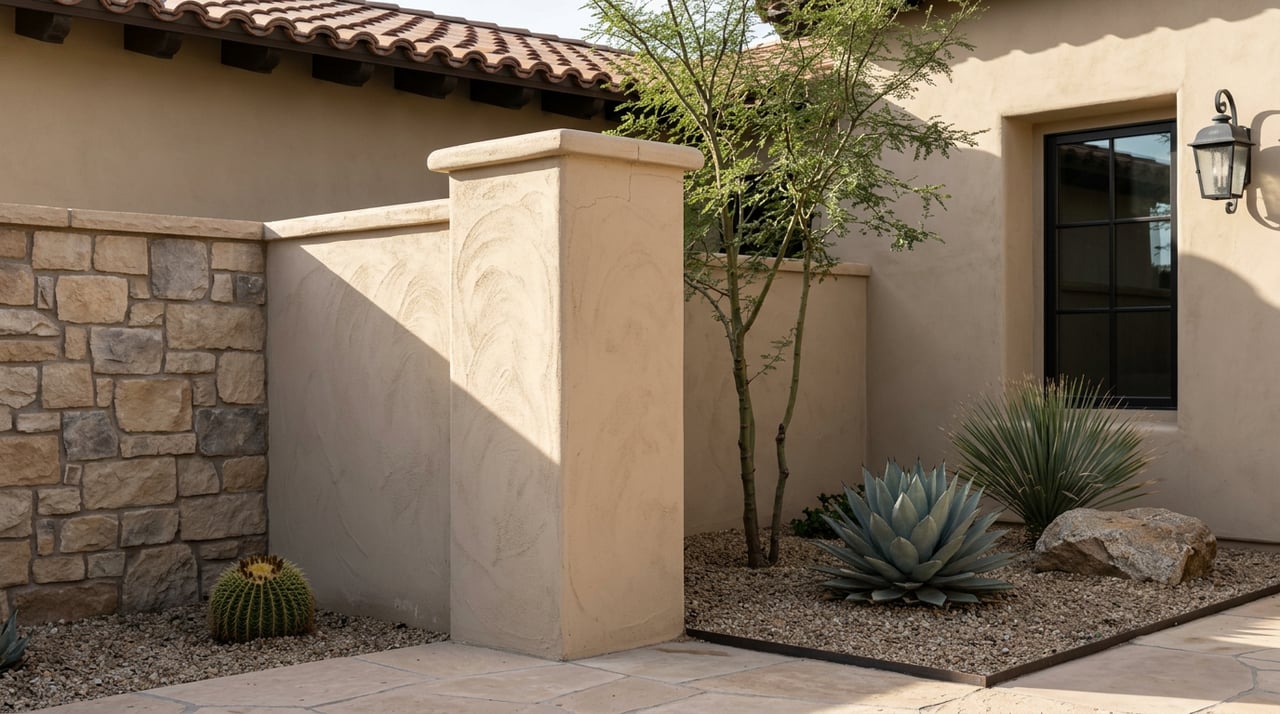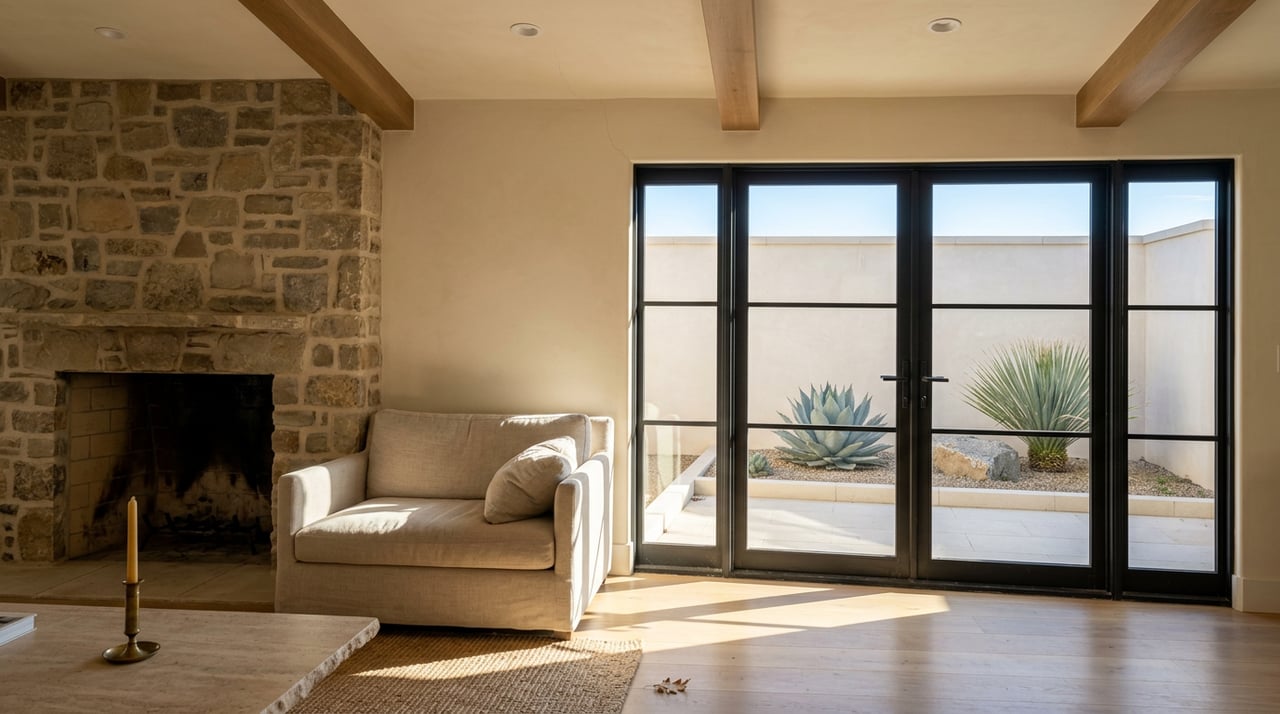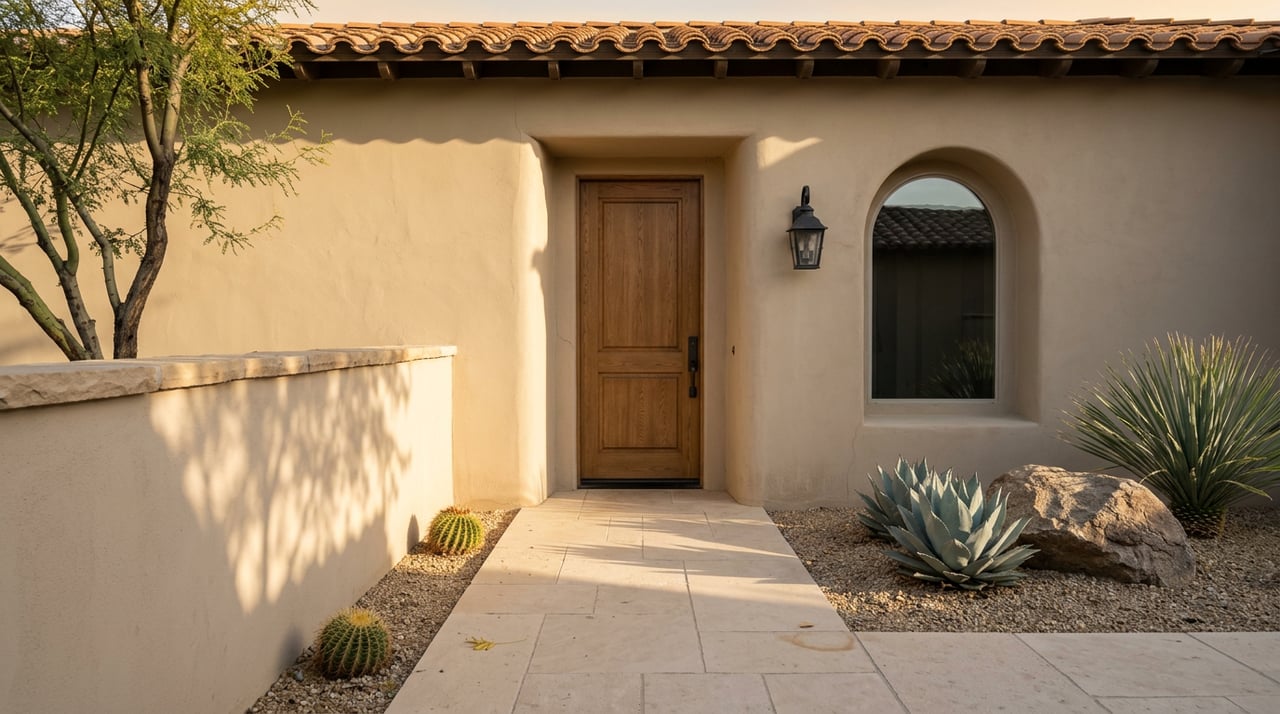
"We thought at first it was 55 and up, since it is a Del Webb, but it's actually not age-restricted at all."
A new Terravita owner posted that observation in a public review after closing on a home in the guard-gated North Scottsdale community. It captures something almost every buyer discovers only after they've already started shopping there: the name, the builder, and the marketing all point to a retirement community. The deed does not.
That gap between reputation and law is the thing worth understanding before you write an offer, not after. It changes what you can expect at closing, who you're actually competing against for resale, and what kind of long-term bet you're making on a property that behaves like an age-restricted community without carrying any of the legal obligations of one.
Del Webb Built It. The Deed Never Restricted It.
Del Webb, the developer that made "55 and up" a household phrase through Sun City, built Terravita between 1993 and 1999. The community covers 823 acres and holds 1,380 homes across 23 distinct neighborhoods, governed by a layered structure that includes the Terravita Community Association as the master HOA, the Terravita Country Club handling social membership and amenities, and a separate golf club for residents who want course access. That governance detail matters here: none of those three entities carries an age restriction in its founding documents. A specialist site that tracks golf-centric retirement communities across the Southwest states this plainly, noting that Terravita carries no age restriction at all even though it delivers many of the same lifestyle features that legally restricted communities offer.
Compare that to how Terravita gets described elsewhere. National retirement-community directories list it outright as a 55+ community, and a senior-living referral site categorizes it the same way, complete with health-service messaging aimed at older buyers. Those listings aren't wrong about who lives there. They're wrong about what the law requires.
What an Actual Age-Restricted Community Requires
The confusion is understandable, because the alternative, a true HOPA community, comes with a specific and fairly heavy compliance load. Under the federal Housing for Older Persons Act, a community claiming the 55+ exemption from Fair Housing Act familial-status protections has to clear three bars: at least 80 percent of occupied units must have one resident 55 or older, the community has to publish and enforce policies demonstrating that intent, and it has to run an age-verification process, checking resident ages at purchase and re-surveying every two years using documents like a driver's license, birth certificate, or passport. Buyers in those communities sign HOPA acknowledgment forms as part of the closing package.
Terravita does none of this. There's no biennial survey, no occupancy quota being tracked, and no acknowledgment form waiting in your closing documents. Here's how the two models actually compare:
| Community with a legal HOPA exemption | Terravita | |
|---|---|---|
| Age verification survey | Required every two years | Not conducted |
| 80/20 occupancy rule | Must be maintained and documented | No legal requirement |
| HOPA acknowledgment at closing | Signed by buyers | Not part of the closing package |
| Resale buyer pool | Restricted to qualifying households | Open to any buyer |
| Permanent residents under 19 | Prohibited | Legally permitted |
Then Why Does the Census Say the Median Age Is 71?
If the law isn't doing the sorting, something else is, and that something is worth naming because it's the actual mechanism at work. Census data compiled for the neighborhood puts the median resident age at 71, well above the surrounding Scottsdale market. Nobody is enforcing that number. The community is producing it voluntarily, through three ordinary forces working together.
First, every home in Terravita is single-story. That's a floor plan decision made in the 1990s that happens to be far more attractive to a buyer managing knees and hips than to a family that wants separate levels for kids and parents. Second, the social calendar built around the 34,000-square-foot clubhouse, the tennis program run by a USPTA professional, the resident-run Art League, and daytime activities like wine dinners and themed brunches, is scheduled for people with weekday flexibility, which skews toward retirees and empty nesters far more than dual-income households with school pickups. Third, the marketing funnel itself does the sorting before a buyer ever calls an agent. Portals built for retirement shoppers list Terravita alongside genuine 55+ communities, so the buyers who find it there are already looking for that lifestyle. A family searching for a four-bedroom home near good schools is unlikely to land on a listing tagged as a retirement community in the first place, restriction or no restriction.
The outcome looks identical to a legally restricted community. The path to get there is entirely different, and that difference is where the real opportunity sits for anyone thinking past the next five years.
The Hedge Nobody Markets
Here's the part that doesn't show up in any listing description. Because Terravita never claimed the HOPA exemption, it never took on the exemption's biggest long-term risk: what happens if the demographic shifts.
A true 55+ community is legally locked into its buyer pool. If national demand among retirees softens, or if a generation of buyers simply ages out faster than new retirees arrive to replace them, a Sun City or Trilogy-style community has no lever to pull. The deed restriction stays until the association goes through the legal process of removing it, and until then, every seller is fishing from the same narrowing pond.
Terravita has no such ceiling. If retiree demand cools, a Terravita seller can market to a family, an investor, or a relocating professional without amending a single governing document. The community behaves like an age-restricted enclave today because self-selection currently makes it advantageous to do so. If that advantage ever flips, nothing in the CC&Rs stands in the way. That flexibility is a form of resale insurance that legally restricted competitors simply don't carry, and it's worth factoring into how you think about long-term liquidity, not just today's buyer pool.
What This Means If You're Comparing Terravita to a Real 55+ Community
If you're cross-shopping Terravita against Sun City West, Trilogy at Vistancia, or a similar legally restricted community, a few practical differences follow directly from everything above:
- You won't sign HOPA paperwork at closing in Terravita, because there's no exemption being claimed.
- A grandchild or adult child living with you full time isn't subject to a permanent-residency age limit, since Terravita isn't enforcing the under-19 restriction that true HOPA communities must.
- Homes fall under the Cave Creek Unified School District, with children zoned to Black Mountain Elementary, Sonoran Trails Middle, and Cactus Shadows High. That's functionally irrelevant to the vast majority of current owners, but it's a live fact for the rare family buyer, and it's a detail true 55+ communities generally can't offer at all.
- Resale pricing has shown real range depending on lot type. Homes closed in Terravita in July and August 2026 for figures spanning roughly $625,000 for a smaller interior model up to $1,625,000 for a larger view-lot home, and average list prices were tracking around $1,152,742 as of the first week of August 2026. That spread reflects lot and view premiums more than anything related to age composition, which is itself a useful reminder that the demographic story and the pricing story aren't the same story.
- Mandatory country club dues currently run around $316 a month for the Terravita Country Club plus roughly $456 per quarter for the community association, with golf membership priced separately and optional. None of those figures move based on age restriction status. They're driven by amenity cost, not legal classification.
Frequently Asked Questions
Can someone under 55 buy a home in Terravita? Yes. There is no age requirement tied to purchase or occupancy.
Do buyers sign age-restriction acknowledgment forms at closing? No. Because Terravita doesn't claim the HOPA exemption, that paperwork isn't part of the closing package the way it would be in a legally restricted community.
Are children permitted to live in Terravita full time? Yes, legally. In practice, the community's demographics skew heavily toward retirees and empty nesters, but that's a function of self-selection, not a deed restriction.
Why do so many sites list Terravita as a 55+ community if it isn't one? Retirement-focused directories tend to classify Del Webb-built communities as age-restricted by association with the builder's broader reputation, even when the specific community never adopted that legal status.
If you're weighing Terravita against a legally age-restricted community elsewhere in the Valley, or trying to figure out what its non-restricted status actually means for your resale timeline, that's exactly the kind of nuance worth working through with someone who tracks these communities daily. The Torie Ellens Team can walk you through the real numbers behind the listings and help you decide which structure actually fits your plans. Schedule Your Concierge Consultation.